CETME Modelo 58
Overview
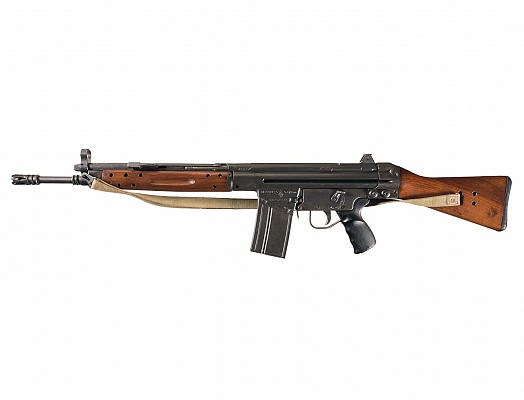
CETME Modelo C
Left side view of a CETME Modelo C battle rifle.
Source: Unknown author -
© Copyright lies with original owner
1965 for Modelo C
Ludwig Vorgrimler (lead designer)
1961 - 1983 (Modelo B and later)
Description
Introduction
The Modelo 58 is an early Cold War era battle rifle of Spanish origin. The design is based on a mixture of World War 2 era Nazi German and French designs. The design is best known as leading to the German Heckler & Koch G3 battle rifle, which was produced in far greater numbers and more of an export success than the Modelo 58. The name Modelo 58 refers to the Spanish military designation for the year of formal adoption. The manufacturer CETME refers to these rifles by alphabet.
Design
The Modelo 58 is a battle rifle using the roller delayed blowback design that was also prototyped in the Nazi German StG 45(M) and designs by former Mauser engineers at the French AME arsenal in Mulhouse. Early designs were for several types of more intermediate cartridge than the 7.62x51mm full power cartridge adopted by NATO.
Firepower
The Modelo 58 fires the 7.62x51mm NATO round from a 20 round magazine. It is a select fire rifle with a cyclic rate of fire of about 600 rpm. Effective range is quoted as 600 meters, although the sights go up to a more practical 400 meters. As with all battle rifles in 7.62mm NATO the practicality of automatic fire is debatable. For less than a decade in Spanish service the Modelo B was chambered in 7.62x51mm CETME, dimensionaly similar to the NATO round but firing a lighter bullet with less propellant. A similar approach as Japan with their Type 64 rifle, this had a limited benefit less recoil.
Users
The Modelo 58 was formally adopted by Spain in 1958 and in practice since 1961. Various types of CETME rifles were looked at by over 10 European nations, although all of them adopted the FAL or G3. The Modelo 58 was exported to various nations. In Spanish service it was supplemented and replaced by the CETME Modelo L.
Variants
Series production
Prototypes and trials batches
Details
Media
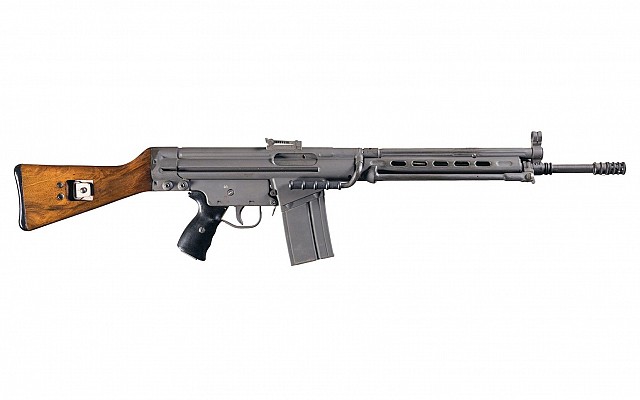
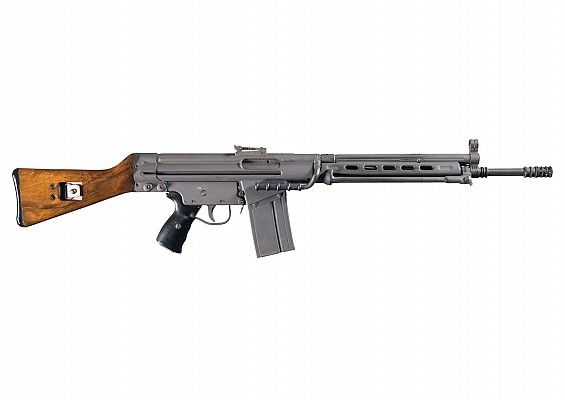
CETME Modelo B
Right side view of a semi-automatic version of the CETME Modelo B battle rifle. Note the bipod folding into the metal handguard.
Source: Rock Island Action Company
Copyright: Copyright lies with original owner
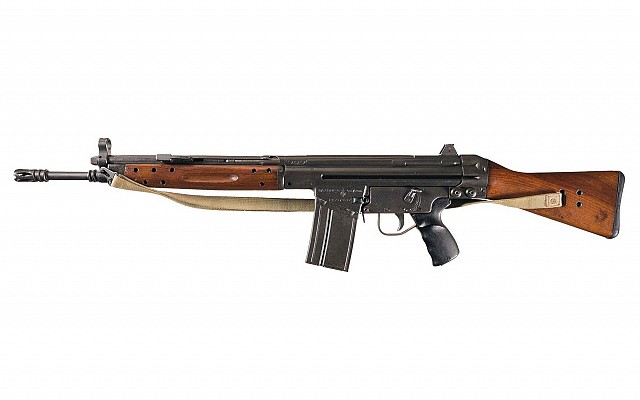
CETME Modelo C
Left side view of a CETME Modelo C battle rifle.
Source: Unknown author
Copyright: Copyright lies with original owner
Related articles
Heckler & Koch G3
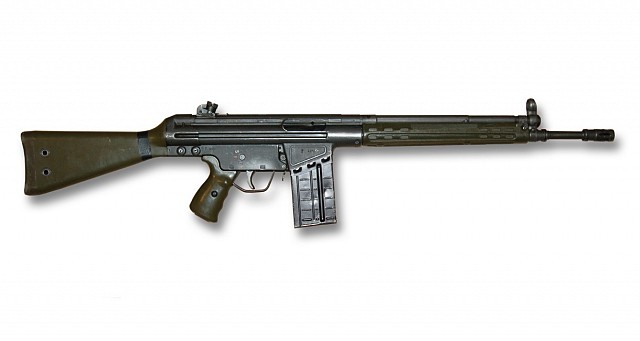
The Modelo 58 design was further developed into the German G3 that was adopted for German military service and exported in far greater numbers than the Modelo 58 series of battle rifles.
CETME Modelo L
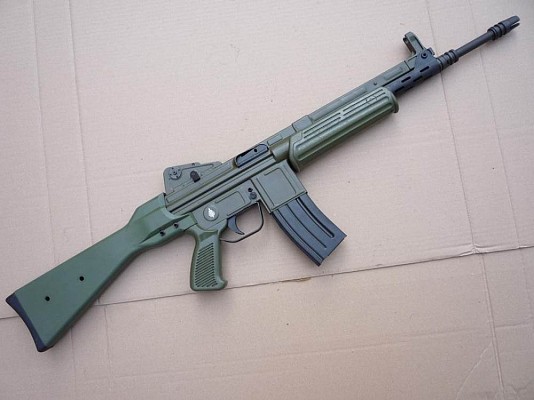
In Spanish service the Modelo 58 series of rifles was replaced by the locally developed Modelo L. This a is an assault rifle chambered in 5.56x45mm using the same roller delayed blowback operating mechanism.
Howa Type 64
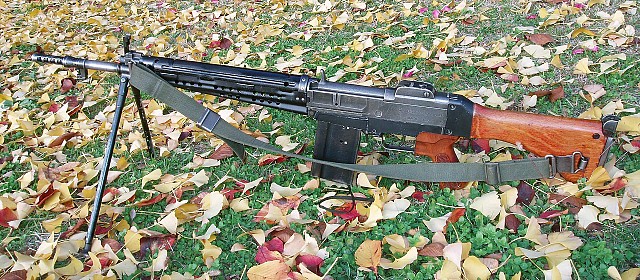
Japan employed a similar approach as Spain by introducing a cartridge dimensionally similar to the 7.62x51mm NATO round, but being a softer shooting variant. This was used in their domestic Type 64 battle rifle.